It's the moment in the bathroom most people have had. You're already in the shower, hot water running, and only then do you remember the necklace, the ring, the earrings. Worth taking them off, or not?
Yes. Kaleya's stainless steel pieces with EverShield PVD+ handle daily showers. Soap, shampoo, hot water: all expected. Sterling silver tarnishes faster though, and gets its own section below.
Quick reference: what survives a daily shower
| Material | Hot water | Soap and shampoo | Daily showers |
|---|---|---|---|
| EverShield PVD+ on stainless steel | Fine | Fine | Yes |
| 18k Gold PVD on stainless steel | Fine | Fine | Yes |
| 925 sterling silver | Speeds tarnish | Speeds tarnish | Occasional |
| Cheap gold plating (other brands) | Strips fast | Strips fast | No |
Hot water and soap: what actually happens
Hot water alone doesn't damage stainless steel. A chromium oxide layer forms naturally on the surface, locks tight, and stays bonded through showers, washes, and decades of use. Same reason your kitchen sink doesn't rust. Heat speeds up some reactions, but the bond between coating and steel doesn't break at shower temperatures. It's chemistry, not magic.

Soap is where cheap plating starts to fail. Residue sits in the microscopic gap between a thin gold layer and the base metal below, slowly working at the bond. Cheap plating peels under those conditions. EverShield PVD+ doesn't peel because there's no gap to peel from. Its coating sits at a molecular level on surgical-grade steel rather than perched on top, so soap residue has nowhere structural to do damage. A surface film can build up over time, but it wipes off with a dry cloth.
For everyday wear, that means Kaleya PVD pieces stay shower-ready through the full guarantee window. Necklaces, rings, bracelets, the lot. Kaleya's two-year colour guarantee assumes you shower with them, not in spite of doing so. Skip the shower-removal habit and you're treating the pieces as designed. See the gold plating durability guide for the longer answer on why bonded coatings and cheap plating sit in completely different product categories.
Two rings you can wear through showers without thinking about it:

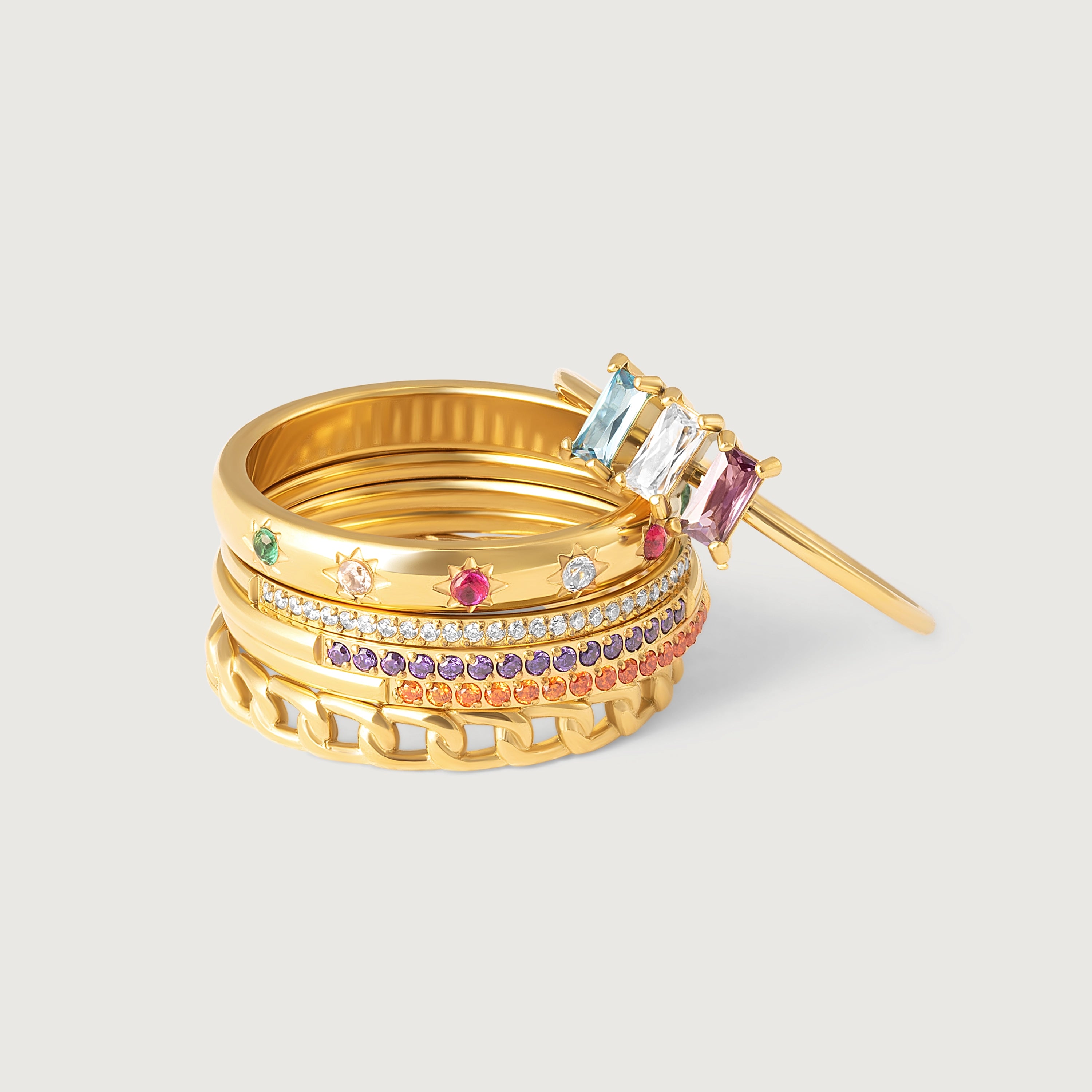
Sunburst Signet Ring in Gold
Classic signet shape with a sunburst detail. Built on 18k Gold PVD over surgical-grade steel. Soap residue and hot water both wash off without touching the colour.
View Sunburst Signet Ring
Midas Wave Ring
Sculpted wave band, slimmer than the signet. Made for stacking. Same surgical-grade steel base with 18k Gold PVD, so soap washes off and the colour stays put.
View Midas Wave RingShampoo, conditioner, and hair products
Shampoo adds a slightly different problem. Sulfates in mass-market shampoos lift oils, which is the job, but the same chemistry can lift trace metals from low-quality jewellery. PVD pieces have nothing to lift. Bonded at a molecular level to surgical-grade steel, the coating stays stable at shower temperatures. Same material sits underneath as the metal used for surgical instruments.
Hair oils, leave-in treatments, dry shampoo, and styling sprays can leave a slight residue on jewellery worn through a full wash routine. Wipe pieces down once a week with a soft cloth if heavy product is part of your daily look. That's it. No abrasives, no toothbrush, no scrubbing.
Hoops and drops you can wash your hair around:

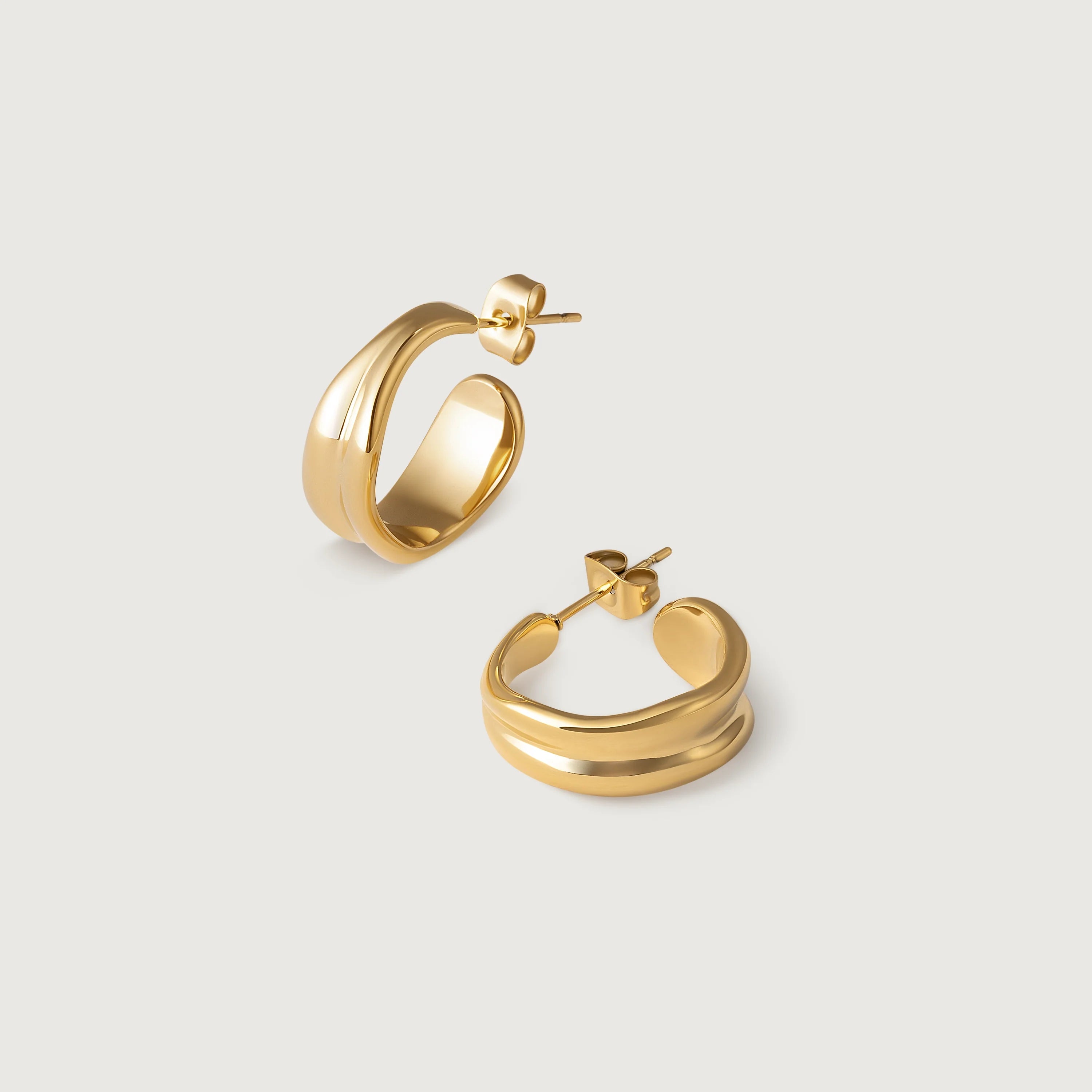
Pharos Hoops
Mid-weight hoops sized for daily wear. Stay in through shampoo and conditioner. No snagging in long hair, no catching on towels.
View Pharos Hoops
Golden Globes
Sculptural globe drops built for daily wear. The post finish holds against repeat showers. Closed shape, so nothing tangles in wet hair.
View Golden GlobesHard water and the UK problem no one mentions
One thing UK readers will recognise: hard water is real, particularly in London, the Southeast, and large parts of East Anglia. Mineral content leaves a fine white film on anything it touches, including jewellery. Calcium, magnesium, that sort of thing. Wipes off easily with a dry cloth, but builds faster on pieces worn through every shower. A weekly cloth-down handles it.
Sterling silver: the honest caveat
Sterling silver is its own beast in the shower. Hypoallergenic, durable, but reactive. Sulfides in some shampoos and trace minerals in hard water both speed up tarnish on silver in ways they don't on bonded PVD. Rinse and pat dry after every shower if you want silver in your daily rotation. Otherwise PVD+ wins. Save sterling silver pieces for evenings out and drier days.
If colour is what's missing from a metal-heavy rotation, the beaded route is the simpler compromise. Lighter weight, hypoallergenic chains, easier through the daily wash.

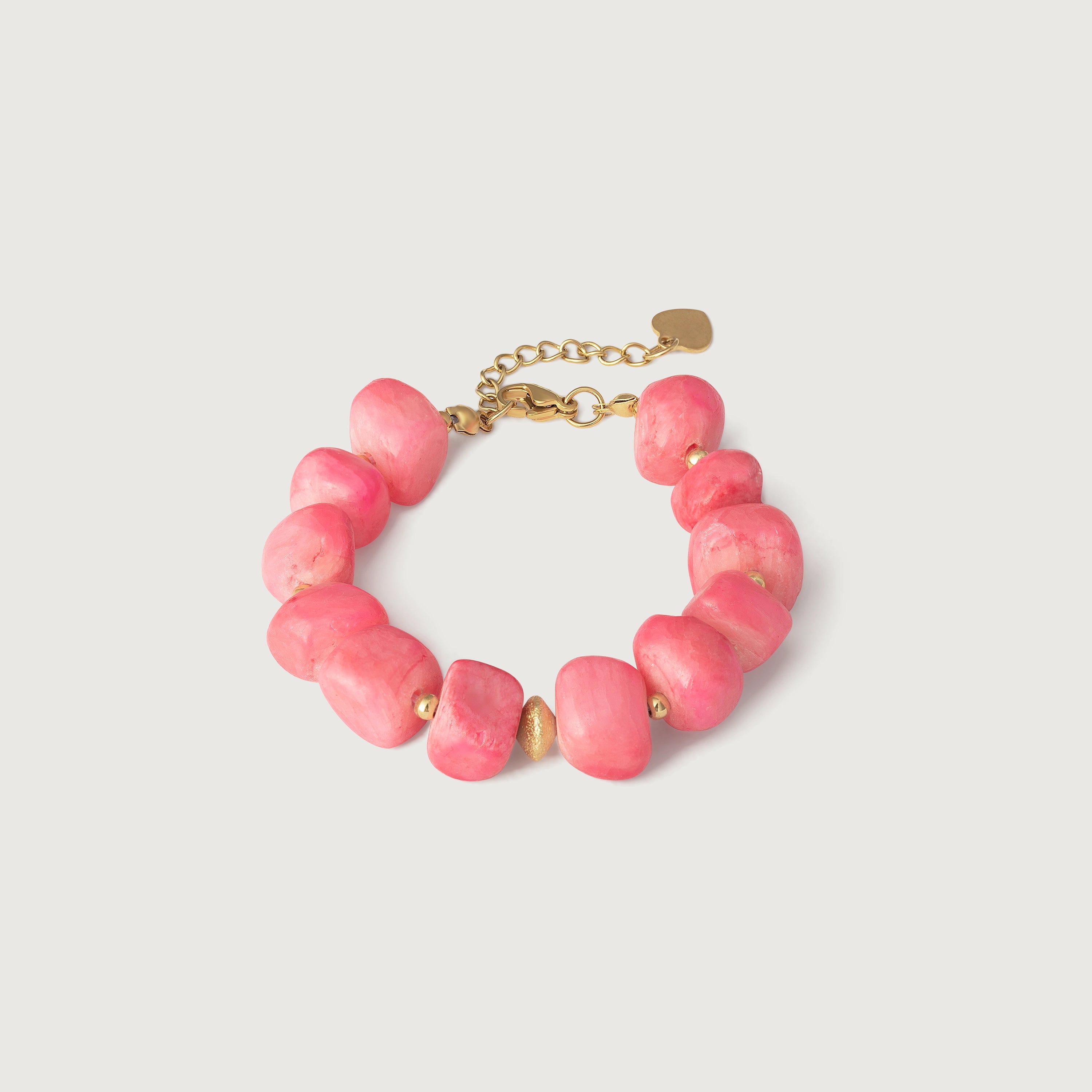
Halo Rose Beaded Necklace
Soft rose-toned beads on a hypoallergenic chain. Pairs cleanly with gold or silver in a layering stack.
View Halo Rose Beaded Necklace
Rainbow Bead Bar Chain Necklace in Gold
Rainbow bead bar set into a gold chain. The colour sits at the front while the chain reads as everyday gold from the side, useful for breaking up an all-metal stack.
View Rainbow Bead Bar Chain NecklaceThe lazy daily routine
Here's the honest truth about most jewellery wearers: nobody takes their pieces off before every shower. People forget. Plenty can't be bothered, and stiff rings don't slip off easily. Kaleya's whole product brief assumes this. The daily shower routine for PVD jewellery is the same as no routine at all. If anything bothers you about a faint shower film over time, here's the once-a-week version:
- Wipe down with a soft dry cloth.
- Once a month, use a drop of washing-up liquid in warm water if heavy hair products have been in rotation.
- Dry properly before putting it back in the dish you keep on the bathroom shelf.
Three shower myths, fast
- "Hot water damages gold jewellery."Not the bonded PVD kind. Heat speeds up reactions on cheap plating that's already loose, but the molecular bond on surgical-grade steel doesn't break at shower temperatures. Hot tubs are the exception, since the chemistry there is heavier than a domestic shower.
- "Rings should always come off before a shower."Only fine jewellery, soft gemstones, and sterling silver justify that habit. PVD-coated rings on stainless steel are designed to stay on through showers. Taking them off more often actually raises the chance of leaving them somewhere and losing them.
- "Shampoo turns gold jewellery green."That's an oxidation issue with cheap plating reacting with base metals underneath, not gold itself. PVD on surgical-grade steel has no reactive base metal to oxidise, which is why the green never shows up.
What Kaleya actually guarantees
Every Kaleya PVD piece carries the EverShield PVD+ coating bonded to surgical-grade stainless steel. That bond earns the two-year colour guarantee. Fading, tarnishing, discolouration during normal wear: all covered. That's the official line. Unofficially, "normal wear" includes daily showers, hot or cold, hard water or soft, soap or no soap. Plus hair routines.
Designed in London. Built for the way most people actually wear jewellery, which is to say: not removed before every shower, slept in, swum in, lived in. If you're working out which Kaleya pieces survive what, the pool and sea guide covers the other side of the 24/7 wear story. Two articles, one promise: these pieces are made to be lived in, and the guarantee exists because we're willing to back that.
Looking for jewellery you don't have to think about?
FAQ
Can I shower with my Kaleya jewellery?
Yes. Stainless steel pieces with EverShield PVD+ handle daily showers without trouble. Soap, shampoo, hot water, hair products. All part of the brief. Kaleya's two-year colour guarantee assumes you shower with them, not in spite of doing so.
Does shampoo damage gold plated jewellery?
For cheap gold plating, yes. Sulfates in shampoo work at the bond between a thin gold layer and the base metal underneath, accelerating peel and fade. For 18k Gold PVD bonded to surgical-grade steel, shampoo doesn't reach a bond to damage.
Is hot water bad for stainless steel jewellery?
No. Hot water at shower temperatures sits well within what stainless steel handles. Steel's chromium oxide layer forms naturally and stays bonded at far higher temperatures than any domestic shower reaches. EverShield PVD+ adds a second protective layer over the top.
Can I shower with sterling silver jewellery?
Occasionally, yes. Daily showers tarnish silver faster than PVD pieces because sulfides in some shampoos and trace minerals in hard water both react with silver alloys. Rinse and pat dry after every shower if you want silver in your daily rotation, or save it for drier days.
Does hard water leave marks on jewellery?
Hard water leaves a fine mineral film on anything it touches, including jewellery. Calcium and magnesium deposits. Wipes off easily with a dry cloth. UK areas with hard water (London, Southeast, East Anglia) will see this more, but it doesn't damage the metal underneath.
Do I need to remove my jewellery before showering?
Not for PVD pieces. Stainless steel with EverShield PVD+ is designed to be worn through showers, and the two-year colour guarantee covers daily wear. For sterling silver and fine jewellery with soft stones, removing it before a shower extends the life of the piece, but it's not required for everyday PVD.