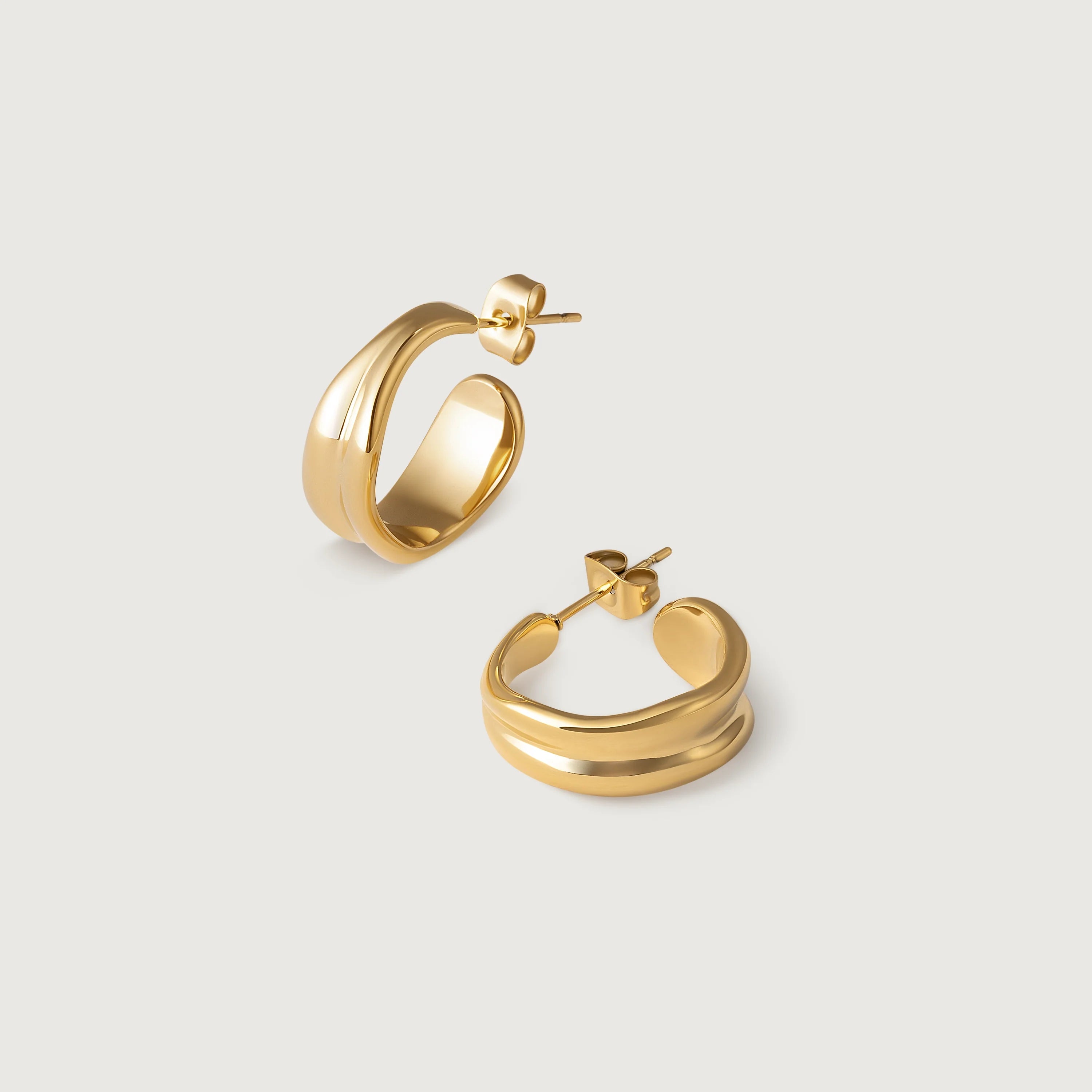
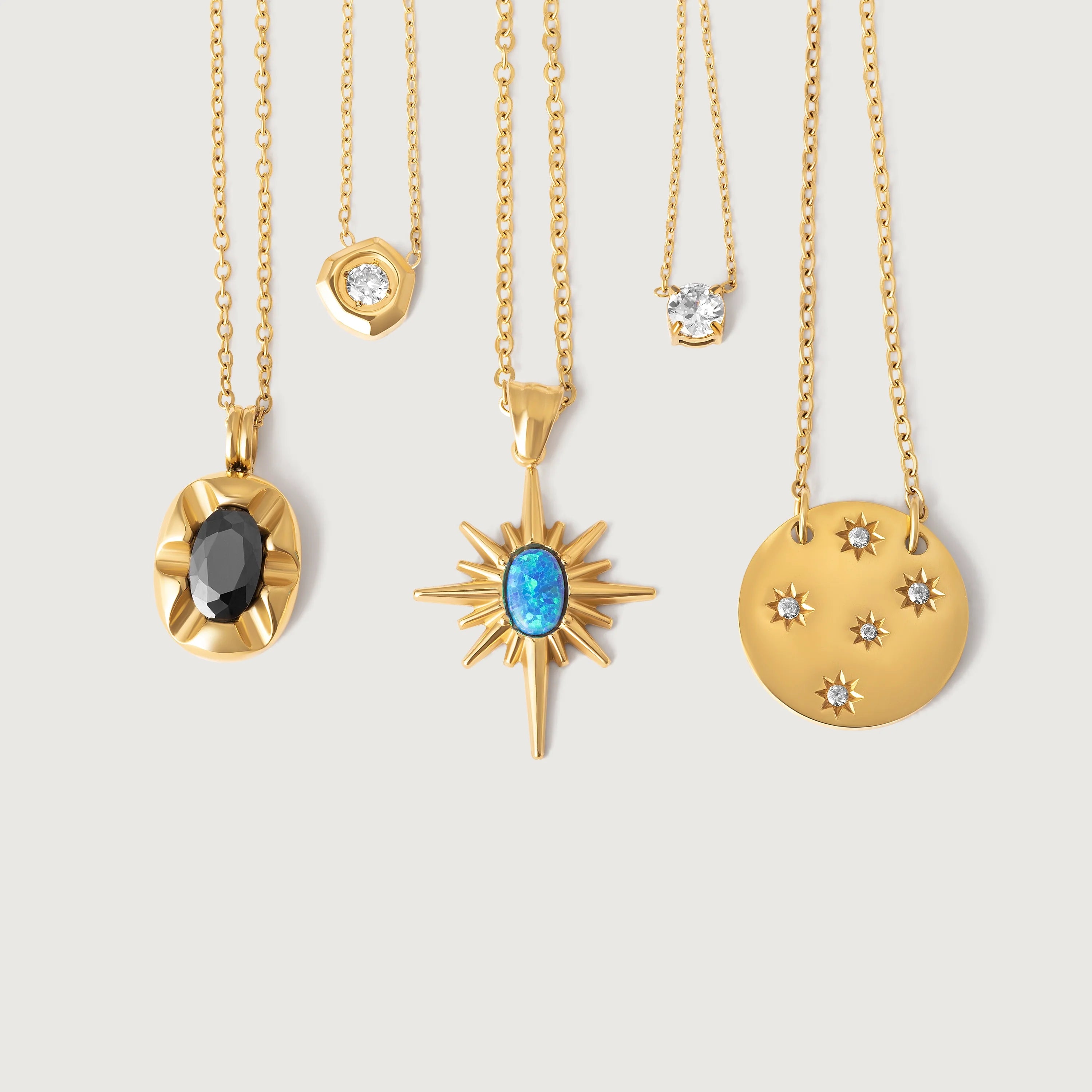
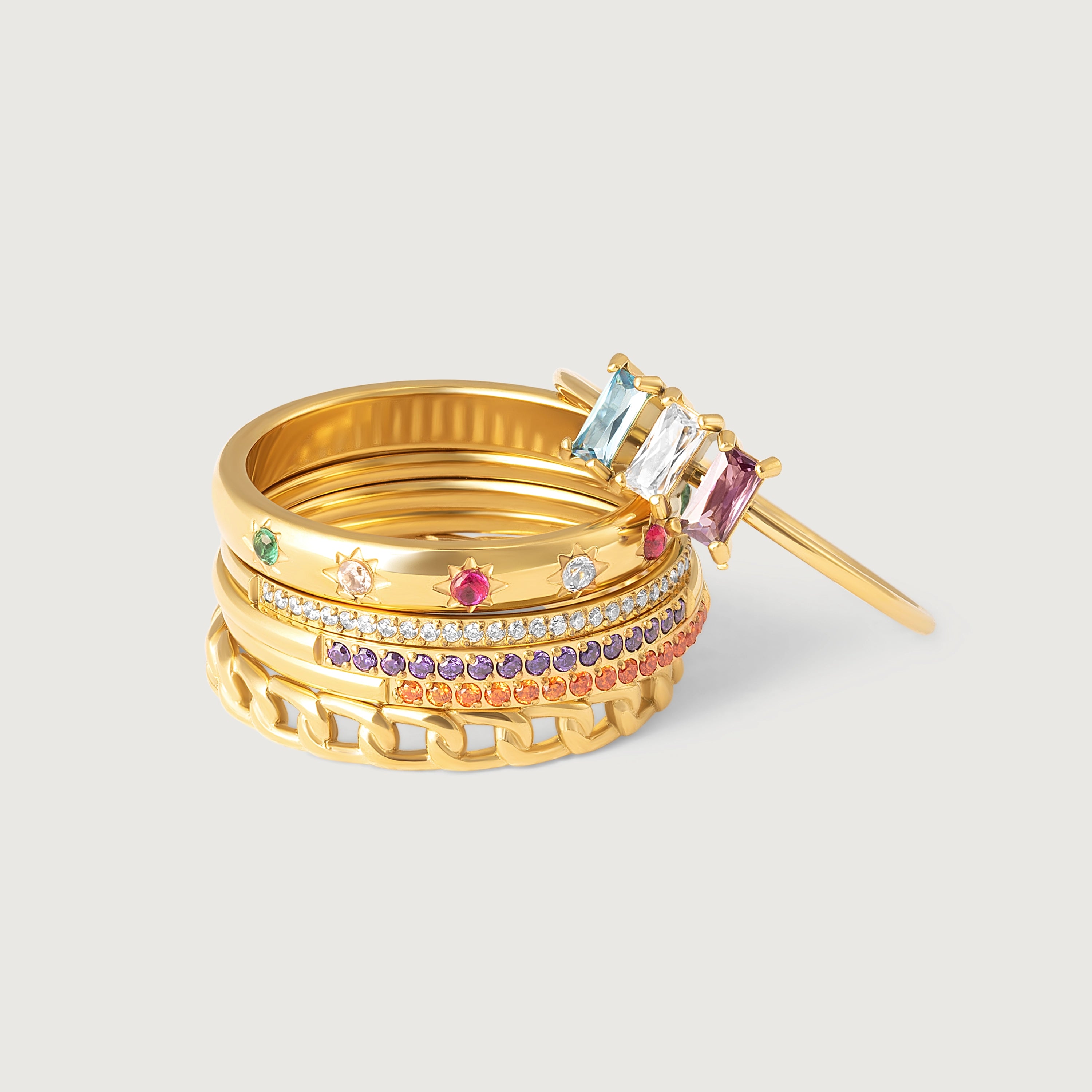
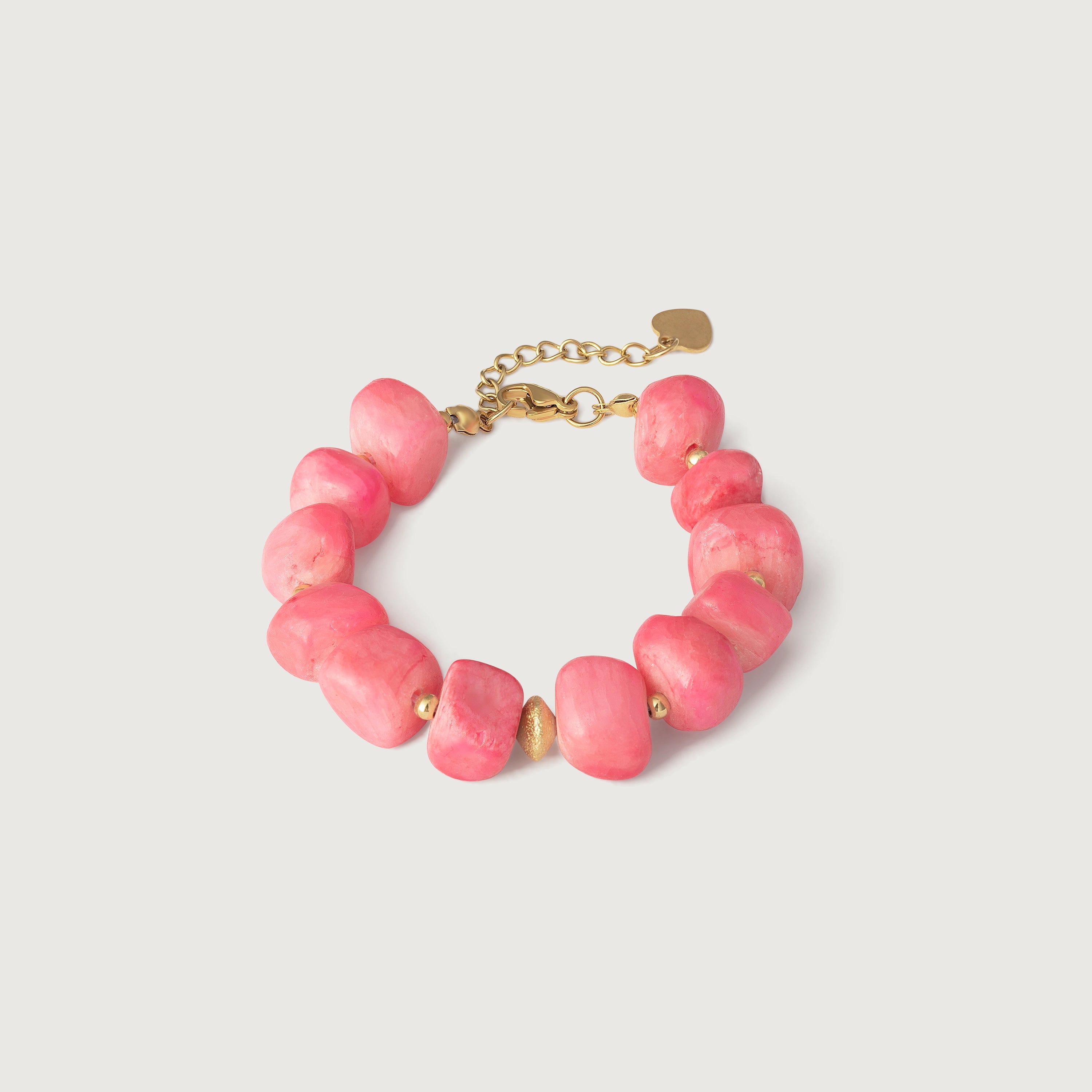
Yes, Kaleya's stainless steel pieces with EverShield PVD+ handle pool, sea, and shower without trouble. The two-year colour guarantee backs that up. Sterling silver is a different story, and we'll get into that further down.

Quick reference: what survives what
| Material | Pool (chlorine) | Sea (saltwater) | Daily wear? |
|---|---|---|---|
| EverShield PVD+ on stainless steel | Fine | Fine | Yes |
| 18k Gold PVD on stainless steel | Fine | Fine | Yes |
| 925 sterling silver | Avoid daily | Avoid daily | Occasional |
| Cheap gold plating (other brands) | Strips fast | Strips fast | No |
Pool: what chlorine actually does
Chlorine is the loud one. Pool water sits at a concentration designed to kill bacteria, which means it strips weakly bonded coatings clean off your jewellery. Cheap gold plating fails this way. Chlorine reaches the base metal underneath, and the colour comes off in patches over weeks of regular pool use.
EverShield PVD+ behaves differently. Its coating bonds at a molecular level to surgical-grade stainless steel rather than sitting on top. Chlorine has nothing to peel away. Steel itself can't rust, thanks to the chromium oxide layer that forms on the surface, the same chemistry that makes surgical instruments survive autoclaving. So a Kaleya PVD piece in your local lido behaves like the pool's stainless steel ladder rails. Dull water, bright metal, no drama.
Swim laps three times a week and you might still want to rinse afterwards out of habit. Chlorine residue can leave a film over time. Quick rinse fixes that. If you're in the pool most days of the week, you'll see no colour shift across the two-year guarantee window, which is the bar Kaleya designs to. Two earring picks worth flagging here for anyone who swims with hoops or cuffs in:

Apollo Ear Cuffs
No piercing required, so nothing threads through the lobe. Means no gap for chlorinated water or salt crystals to settle into around an earring back.
View Apollo Ear Cuffs
Gaia Droppers Earrings
Lightweight drops on EverShield PVD+ posts. Stay put through lengths without tangling in goggles or hair, and the post finish holds against repeat pool wear.
View Gaia Droppers EarringsSea: what saltwater actually does
Saltwater is rougher than chlorine. Salt corrodes and abrades at the same time, which makes it harsher than chlorinated pool water in most respects. Stainless steel resists both. PVD adds a second barrier over the top. Those orange marks you sometimes see on jewellery after a beach day aren't actually rust on the steel itself. It's iron deposits from cheaper alloys reacting with salt.
For Kaleya pieces, the sea is fine. Customers wear theirs on coastal holidays without trouble, including in tropical heat and full days at the beach. The habit worth picking up is the freshwater rinse afterwards. Salt crystals build up around clasps over time, and a quick rinse clears them out before they cause friction. Think of it like washing sand off your feet. Not optional. Most beach time in the Kaleya range goes to the waterproof necklaces, with the everyday ring as the second piece earning constant rotation.

Helios Ring
Sculptural everyday ring on a bonded gold finish that holds in chlorinated pool water and through full days in the sea. Built for hands you don't take it off for: showers, swims, sundowners, sleep.
View Helios RingSterling silver: the honest caveat
Sterling silver is its own beast. Hypoallergenic, durable, properly beautiful. Trouble is, chlorine and saltwater both speed up tarnish, which means a summer of pool laps will dull a silver chain in ways that take longer to undo than they did to cause. Rinse and pat dry after every swim if you want silver in your daily rotation. For frequent swimmers, the PVD+ pieces are the better daily call. Keep silver for evenings, dinners, drier days.
If colour is what's missing from the metal-heavy summer rotation, the beaded chains are the easier compromise. Worn short under a longer pendant, or solo against bare skin and a linen shirt.

Rainbow Beaded Necklace
Summer colour pop on a hypoallergenic chain. Useful for breaking up an all-gold or all-silver layering stack.
View Rainbow Beaded Necklace
Olive Green Beaded Necklace
Earthy green tones that pair with bare skin and linen. Quieter than the rainbow piece, easier to wear daily.
View Olive Green Beaded Necklace
Halo Jade Beaded Necklace
Jade-toned beads in a soft halo finish. Pairs cleanly across gold and silver, which makes it useful in a mixed-metal stack.
View Halo Jade Beaded NecklaceHot tubs and spas
Hot tubs are the worst case. Chlorine concentrated, heat speeding up every reaction, treatment chemicals stronger than a regular pool: take yours off before getting in, or rinse them straight after.
After-swim care in 60 seconds
Most jewellery problems after a swim are problems of neglect. Water itself isn't the issue. What sits on the metal afterwards is. Salt crystals, chlorine residue, sun cream, sweat, sand: rinse it off, dry it off, and the piece keeps its shine for years. Whole thing takes about a minute.
- Rinse with fresh tap water, clasp included.
- Pat dry with a soft cloth, microfibre if you have one to hand.
- Let it air dry for ten minutes before putting it back in storage.
- Once a month, run the same routine over a sink with a drop of washing-up liquid. No abrasives, no toothbrushes, no scrubbing.
Three swim myths, fast
- "All waterproof jewellery is the same."Not even close. Cheap waterproof plating fails in months because the gold is sitting on top of the base metal rather than bonded to it. PVD bonded to surgical-grade steel is a different product category.
- "Sterling silver tarnishes the moment it touches water."Tarnish is gradual. One swim won't ruin a silver chain. It's months of cumulative chlorine that dulls the surface, and a quick rinse and dry after each swim slows that right down.
- "Saltwater is worse than chlorine."It depends on the piece. For coated jewellery, chlorine is the harsher of the two because it strips coatings off. Saltwater hits solid silver harder.
What Kaleya actually guarantees
Every Kaleya PVD piece carries the EverShield PVD+ coating bonded to surgical-grade stainless steel. That coating sits at the heart of our two-year colour guarantee, which covers fading, tarnishing, and discolouration during normal wear. Daily swimming counts. So does a holiday in the sea. So does that shower you didn't bother taking your earrings off for.
Designed in London. Built for the way most people actually wear jewellery, which is to say: not removed before every shower, not stored in velvet boxes between outings, not babied. These pieces are made to be lived in, and the guarantee exists because we're willing to back that promise.
Looking for pieces that won't flinch at a daily swim?
FAQ
Can I swim in the pool with my Kaleya jewellery?
Yes. Stainless steel pieces with the EverShield PVD+ coating handle chlorine without trouble, and the two-year colour guarantee covers daily wear including swimming. A rinse afterwards keeps the shine sharp but isn't required.
Does saltwater damage stainless steel jewellery?
Less than you'd think. Stainless steel resists salt well thanks to the chromium oxide layer that forms on the surface, and EverShield PVD+ adds a second barrier on top. Rinse yours after a beach day to clear crystals from the clasp.
Is chlorine bad for gold plated jewellery?
Depends on the gold. Cheap plating fails fast: chlorine reaches the base metal underneath, and the colour comes off in patches within weeks of regular pool wear. PVD bonded to surgical-grade steel has nothing to peel away.
Can I swim with sterling silver jewellery?
Occasionally, fine. Daily chlorine or saltwater speeds up tarnish noticeably, so frequent swimmers are better off with the PVD pieces. Keep yours for drier days, or rinse and pat dry after every swim if you want silver in your rotation.
Should I rinse my jewellery after swimming?
For sterling silver, yes. For stainless steel, optional. A thirty-second rinse under the tap clears salt, chlorine residue, sun cream, and sweat that would otherwise sit on the metal. For PVD pieces it extends the shine but isn't required.
Does Kaleya jewellery hold up to daily swimming?
Yes. Swimmers who train three or more times a week report no colour shift across the two-year guarantee window. The EverShield PVD+ coating is bonded to surgical-grade stainless steel, the same material used for medical instruments and pool fittings.