Bracelet sizing methodology, stacking rules, and the materials science behind bracelets that don't stain your skin.

Most people's bracelet drawers tell the same story: a tangle of pieces they never wear. One that's too tight. One that turned their wrist green within a fortnight. A couple that looked great in the photo but feel wrong in real life. The problem isn't taste — it's that bracelet sizing is harder to get right online than almost any other type of jewellery, materials are less transparent than they should be, and nobody teaches you how to stack properly before you start spending.
This guide covers the three things that separate a bracelet you wear every day from one that lives in a drawer: getting the sizing right, understanding which materials won't let you down, and learning how to build a stack that looks intentional rather than accidental. Browse the full bracelets collection whenever you're ready, or read on for the methodology first.
Bracelet Styles: What Suits Your Life
Before you think about sizing or stacking, it helps to know what you're working with. Not every bracelet type works for every situation, and knowing which styles suit your day-to-day life saves you from buying pieces that live in a drawer.
Chain Bracelets
The most versatile starting point. Chains come in different link styles — curb, cable, paperclip, herringbone — and most have adjustable lengths with extender chains, which makes sizing forgiving. A single fine chain is the easiest first bracelet because it works alone, stacks well with practically anything, and transitions between casual and dressed-up without effort. If you're only buying one bracelet, make it a chain.
Bangles
Rigid, circular, and designed to move freely on the wrist. Bangles need to clear the widest part of your hand to get on, which means sizing works differently here — you're measuring your hand circumference, not your wrist. They're having a strong moment right now, particularly stacked in multiples of mixed widths. The gentle clink of two or three bangles together is part of the appeal.
Cuffs
Open-ended and adjustable, so sizing is the least critical. Cuffs sit firm above the wrist bone and work as anchor pieces in a stack — the one substantial element that everything else layers around. A good cuff does the heavy lifting so your thinner chains can play supporting roles.
Beaded & Stretch Bracelets
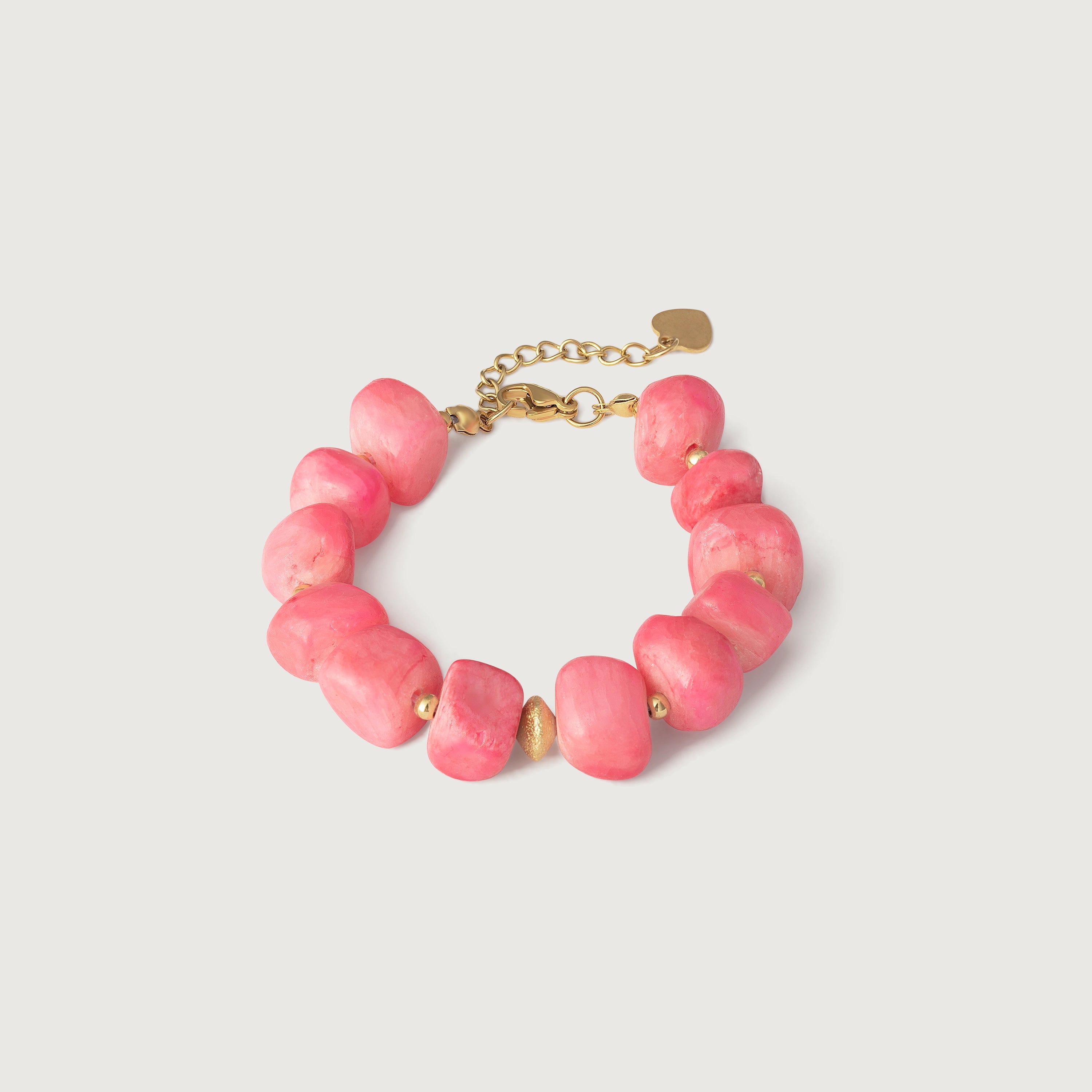
Elastic construction means sizing is rarely an issue. These add colour, texture, and a more relaxed feel to a stack dominated by metal. Think of them as the accent piece — the pop of natural stone or contrasting tone that gives a stack personality beyond the metal palette.
Bracelet Sizing: Why Most Online Purchases Get It Wrong
This is where most online bracelet purchases fall apart. A bracelet that's too tight digs into the skin and feels restrictive; too loose and it slides over your hand, catches on things, and eventually gets taken off for good. Bracelet sizing isn't difficult once you know the method — most people just never learn it.
Measuring Your Wrist
Wrap a flexible tape measure (or a strip of paper, ribbon, or string) around your wrist just below the wrist bone — that's where most bracelets sit. If you're using paper or string, mark where it meets, then measure the length flat against a ruler. That number is your wrist circumference.
The +2cm rule: For most chain bracelets, add 2cm to your wrist measurement for a comfortable fit. A 16cm wrist generally suits an 18cm bracelet. This gives enough room for the bracelet to move naturally without feeling loose. Prefer a snugger fit? Add 1-1.5cm instead. Want it more relaxed? Add 2.5-3cm.
Quick Sizing Reference
14–15cm wrist → 16–17cm bracelet (small)
15.5–16.5cm wrist → 17.5–18.5cm bracelet (medium)
17–18cm wrist → 19–20cm bracelet (large)
18.5cm+ wrist → 20.5cm+ bracelet (extra large)
Bangles Are Different
Because bangles need to pass over your hand rather than clasp around your wrist, you measure differently. Close your fingers together, bring your thumb to your little finger (as if you were about to slide a bangle on), and measure the circumference around the widest part of that shape. The bangle's internal diameter needs to be larger than that measurement divided by 3.14. In practice, most people find that a bangle with an internal diameter of about 6.5cm fits an average hand comfortably.
Open Cuffs and Adjustable Chains
Open cuffs slide on from the side of the wrist and can be gently adjusted for a tighter or looser fit, so precise measurement matters less. Adjustable chain bracelets with extender chains offer similar flexibility — you choose where to clasp based on how you want it to sit that day. If you're nervous about ordering the wrong size online, starting with an adjustable piece removes the risk entirely.
Common Sizing Mistakes
Measuring over the wrist bone instead of just below it adds roughly a centimetre you don't actually need. Pulling the tape too tight gives you a snug measurement that will feel uncomfortable as a bracelet length. And forgetting that bangles need hand clearance, not wrist clearance, is the number one reason bangles get returned.
Materials: Why Your Last Bracelet Turned Your Wrist Green
That greenish discolouration on the skin underneath a bracelet isn't dirt and it isn't an allergy — it's a chemical reaction between copper in the base metal and moisture from your skin. Sweat, hand washing, humidity: anything wet accelerates it. The green itself is harmless, but it's a reliable sign that the metal underneath the plating isn't designed for prolonged skin contact.
This is the core problem with most affordable bracelets. Standard gold plating is a thin layer of gold deposited onto a brass or copper base. It looks beautiful for the first few weeks. Then daily life — water, sweat, friction — wears the plating off, exposing the reactive base metal. The bracelet that looked premium in the product photo is now staining your wrist.
Two materials solve this. 316L stainless steel with PVD coating — what Kaleya calls EverShield PVD+ — uses a fundamentally different process from electroplating. PVD (Physical Vapour Deposition) bonds the gold-tone coating to the steel at a molecular level rather than depositing it on the surface. The result is a finish that doesn't chip, peel, or wear through with daily friction, backed by a two-year colour guarantee. The 316L steel base is nickel-free and contains no copper, which means no green wrist and no reactions — even for sensitive skin. It's the same grade of steel used in surgical instruments and high-end watch cases.
925 sterling silver is the other reliable option for sensitive skin. Naturally hypoallergenic, it doesn't cause the copper-reaction discolouration that plated jewellery does. Silver develops a patina over time — a soft darkening that some people prefer — but it cleans easily with a silver cloth and doesn't deteriorate the way plated finishes do.
The practical difference comes down to maintenance and how you want to wear your bracelets. PVD-coated stainless steel is a waterproof bracelet — you can shower, swim, and exercise without removing it. Sterling silver is water-safe short-term but benefits from being dried after prolonged exposure and stored in an anti-tarnish pouch when not worn. Both are bracelets that don't tarnish in the way standard plating does, and both are leagues ahead of conventional plating for everyday wear. For the full science, our waterproof jewellery guide goes deeper.
| Material | Green Wrist? | Waterproof? | Sensitive Skin Safe? | Maintenance |
|---|---|---|---|---|
| 316L Steel + PVD | No | Yes — shower, swim, gym | Yes — nickel-free | Rinse and dry after saltwater or chlorine |
| 925 Sterling Silver | No | Water-safe, not waterproof | Yes — hypoallergenic | Dry after water, polish periodically, anti-tarnish storage |
| Gold Vermeil | Unlikely (silver base) | No — remove before water | Usually — sterling silver base | Remove for water, store carefully, re-plate eventually |
| Standard Gold Plating | Yes — once plating wears | No | Often not — brass/copper base | High — avoid water, sweat, friction, perfume |
How to Stack Bracelets: Practical Rules
Bracelet stacking is one of the strongest jewellery trends going, and for good reason — a well-built stack is more personal and more interesting than any single piece. But there's a difference between a stack that looks intentional and one that looks cluttered. This bracelet stacking guide focuses on rules rather than vague inspiration.
Start With an Anchor
Every stack needs one piece that sets the visual weight. This is usually the chunkiest element — a cuff, a bangle, or a watch. The anchor sits closest to the hand or at the wrist bone, and everything else layers above or around it. Without an anchor, a stack of thin chains can look unfinished rather than minimal.
The 3-5-7 Principle
Odd numbers of bracelets tend to look more intentional than even numbers. Start with three pieces if you're new to stacking: one anchor, one medium piece, one fine chain. Build to five as your collection grows. Beyond seven, you're competing for wrist space and the stack starts to feel heavy rather than considered.
Combine Styles, Not Just Pieces
The best stacks mix bracelet types, not just multiples of the same thing. A cuff next to a chain next to a beaded piece creates textural contrast that reads as deliberate. Three identical chains in a row reads as accidental. Vary the link size, the width, and the finish.
Stacking With a Watch
If you wear a watch daily, you have two approaches. Stack bracelets on the opposite wrist to keep things balanced, or stack on the same wrist but keep bracelets thinner than the watch case so they don't compete. The watch is always the anchor when it's part of the stack.
Mixing Metals
Gold and silver in the same stack is not only acceptable — it's one of the strongest styling moves going. The key is commitment: either mix them with roughly a 70/30 split (one dominant metal, one accent), or use a two-tone piece as a bridge that ties both metals together. Half-and-half splits tend to look indecisive rather than intentional. If you're building a mixed-metal collection, our mixing metals guide goes deeper on the principles.
What Doesn't Work
Stacking bracelets of identical width creates a uniform look that feels like a uniform rather than a choice. Forcing multiple statement pieces together crowds the wrist — one bold piece, the rest supporting. And if your bracelets are clanking against each other or catching on your keyboard, the stack is too heavy for the context. Stacking should add to your day, not interrupt it.
Summer stacking tip: Warmer months are the easiest time to experiment with stacking because bare wrists show the full stack. Beaded pieces, natural stones, and summer bracelets bring seasonal colour without committing to anything permanent. Start a summer stack to test your preferences, then carry the combinations you like into the rest of the year.
Four Bracelets, Four Roles in a Stack
Each of these pieces serves a different purpose in a bracelet collection. Rather than a generic showcase, here's how they work individually and together.


Looking After Your Bracelets
Bracelets take more daily wear than any other type of jewellery. They're in constant contact with surfaces — desks, keyboards, bags, door handles — and they're exposed to everything your hands encounter: soap, hand cream, water. How much maintenance they need depends entirely on the material.
PVD-coated stainless steel is low-effort. Rinse after swimming in the sea or a chlorinated pool, dry with a soft cloth, and that's it. No special storage, no polishing, no removing before you wash your hands. The coating is designed for exactly this kind of uninterrupted wear, and the stainless steel base won't react with moisture even if the coating eventually wears at a contact point years down the line.
Sterling silver asks a bit more of you. Dry it after heavy water exposure. Store pieces in an anti-tarnish pouch when you're not wearing them for extended periods. Clean periodically with a silver cloth to remove patina buildup. None of this is onerous, but it's worth knowing before you commit to wearing silver bracelets around the clock.
One note on stacking wear: bracelets in a stack rub against each other throughout the day. PVD handles this friction without issue — it's what the coating is engineered for. Softer plating will show wear at the contact points faster than anywhere else on the piece, which is one reason traditional gold-plated bracelets are poorly suited to stacking. If you plan to stack, invest in materials that can handle the friction. For more detailed care advice, our gold plating care guide covers the full picture.
Frequently Asked Questions
A well-fitting bracelet should slide freely along a short section of your wrist without riding up to mid-forearm or slipping over your hand. For most chain bracelets, adding 2cm to your bare wrist measurement gives a comfortable daily-wear fit. If you prefer it snug, add 1–1.5cm. Looser and more relaxed? Add 2.5–3cm. The bracelet should move when you move your hand but not swing wildly or catch on things.
An 18cm bracelet will give you a standard comfort fit with about 2cm of ease. If you prefer tighter, a 17.5cm bracelet works. For a relaxed, slightly loose feel, go for 18.5cm. These measurements apply to chain bracelets with clasps — bangles and cuffs follow different sizing because of how they sit on the wrist.
Standard gold plated bracelets? No — repeated water exposure strips the plating and exposes the reactive base metal underneath. PVD-coated bracelets are different. PVD bonds the gold-tone finish to stainless steel at a molecular level, creating a waterproof surface that handles showers, pools, and sweat without deteriorating. The technology matters more than the colour.
No. The green discolouration comes from copper in base metals reacting with moisture. 316L stainless steel contains no copper and no nickel, so there's nothing to cause the reaction. This is why surgical-grade stainless steel is used for medical implants — it's designed for prolonged, direct skin contact without any adverse reactions.
Three is the sweet spot for a balanced, everyday stack: one anchor piece (a cuff or bangle), one medium chain, and one fine or textured piece. Five works well for a bolder look. Seven is generally the upper limit before a stack starts feeling crowded and heavy. Odd numbers tend to look more intentional than even numbers.
Stack on the same wrist by keeping bracelets thinner than the watch case, letting the watch act as the anchor. Or stack on the opposite wrist for a more balanced look. The main thing to avoid is bracelets that are bulkier than the watch — they'll compete rather than complement, and the constant contact can scratch both surfaces.
PVD stands for Physical Vapour Deposition. It's a coating process used in watchmaking and medical devices where metal particles are bonded to a surface at a molecular level inside a vacuum chamber. Unlike traditional electroplating, which deposits a thin layer on top, PVD integrates with the base metal for a finish that resists chipping, scratching, and water damage. It's what makes a bracelet genuinely waterproof rather than just water-resistant.
Bangles need to pass over your hand, so you measure differently from chain bracelets. Close your fingers together and bring your thumb across to your little finger. Wrap a tape measure around the widest part of that shape. Divide by 3.14 to get the minimum internal diameter you need. For most people, a bangle with an internal diameter of around 6.5cm provides a comfortable fit.
Build Your Stack
Chains, cuffs, bangles — all waterproof, all hypoallergenic, all designed to stay on.
Shop Bracelets