How to put them on, which type goes where, and how to build a stacked ear without committing to another piercing
Ear cuffs are having a moment. They've been creeping into curated ear stacks on Instagram, showing up on runways, and quietly becoming one of the most popular ways to upgrade how your ears look without sitting in a piercing chair. Cuff earrings give you the look of helix and conch piercings with no pain, no healing period, and the freedom to change your mind tomorrow. With ear cuffs no piercing is required.
If you've been curious but haven't tried them yet, the hesitation is almost always the same three questions: will they actually stay on? Will they hurt? And how do you put one on without it sliding straight off? This guide covers all of that. We'll walk through how to wear ear cuffs properly, which styles go where on your ear, how to pair them with studs and hoops for a layered look, and what materials to choose if your skin tends to react to jewellery.

How to Put on an Ear Cuff (It's Easier Than You Think)
Most people's first attempt at wearing a cuff is frustrating because they try to clip it directly onto thick cartilage. That doesn't work. The trick is starting higher up where the ear is thinnest, then sliding down to where you want it.
Find the thin rim at the top of your ear. That's your starting point.
Hold your ear taut with one hand and gently slide the cuff over the edge.
Move it down to where you want it to sit. Rotate it slightly towards the inner ear.
Give it a gentle squeeze to secure the fit. Snug, not tight. It should hold when you tug lightly.
The whole process takes about ten seconds once you've done it a couple of times. If the cuff feels like it might slip, narrow the opening a fraction. If it pinches, widen it slightly. Most cuff earrings are adjustable, so you can fine-tune the fit to match your ear.
If it hurts, it's too tight. Ear cuffs should feel secure but never sore. If you notice redness or discomfort after a few hours, loosen it. Unlike a lobe piercing, there's no hole to distribute the pressure. The cuff holds by contact alone, so getting the tension right is the difference between all-day comfort and taking it off by lunch.
Types of Ear Cuffs and Where They Sit
Not all cuff earrings are the same. The style you choose determines where it sits on your ear and how much of a statement it makes.
Helix Cuffs
The most common type. A simple band that wraps around the upper edge, mimicking a helix piercing. Minimal, clean, and easy to wear all day. Start here if you're new to cuffs.
Conch Cuffs
Wider and more visible. These sit in the flat middle section and tend to be chunkier or more decorative. A conch ear cuff works as a statement piece on its own.
Huggie Cuffs
Small, close-fitting cuffs that hug tight. They look like tiny hoops and blend into a stack without dominating it. Perfect for layering two or three at different heights.
Ear Wraps
The bold option. Wraps climb from the lobe up around the entire ear. More special-occasion than everyday, but nothing else makes the same visual impact.
First cuff? Go with a simple helix band in gold or silver. It's the most forgiving style to put on, the most comfortable for long stretches, and pairs easily with whatever earrings you already own.
Ear Cuffs vs Cartilage Piercings
A cartilage piercing is permanent. You get it done once, put in your favourite piece, and forget about it. But permanence cuts both ways. Cartilage piercings take 3 to 9 months to heal, they hurt, they carry infection risk, and if you change your mind about where the hole is, there's not much you can do about it.
Ear cuffs skip all of that. No needles, no healing time, no aftercare routine. You can wear a cuff in a helix position today, move it to a conch spot tomorrow, and switch ears entirely by the weekend. That flexibility is why a lot of people try cuffs first to test a placement before committing. If you love how a cuff looks at a certain spot for a few weeks, that's a strong signal the permanent version would work.
The trade-off is security. Pierced jewellery stays in place no matter what. A cuff relies on contact pressure and can shift during high-intensity activity if the fit isn't right. For normal daily wear including work, going out, and moderate exercise, a well-adjusted cuff holds firm. For rough sport or anything where you might knock your ear, pierced earrings are more reliable.
Why not both? Many people wear pierced studs on their lobes and add cuffs higher up for texture and dimension. You get security where it matters most and creative flexibility where you want to experiment. Our stud earrings guide covers what to look for in those foundation pieces.
How to Build an Ear Stack with Cuffs
Ear cuff styling is where these pieces really earn their place. A single cuff on its own looks fine, but pairing it with existing studs and hoops transforms your ear from "wearing earrings" to "styled on purpose." Ear cuff stacking is one of the simplest ways to join the curated ear trend that's been building all through 2026.
The Minimal Stack
One stud on the lobe plus one helix cuff. Two pieces, two different positions, and a visual effect that's striking in its simplicity. A gold ear cuff with a matching gold stud reads as intentional without being fussy.
The Layered Stack
Stud on the lobe, huggie hoop on the second hole (if you have one), and a cuff up high. Three earring styles, three different placements, one cohesive look. Keep metals consistent, or deliberately mix them. A silver ear cuff with gold studs works beautifully when the contrast is intentional.
The Statement Stack
Two or three cuffs at different heights, paired with a bold stud or small hoop on the lobe. Stack multiple thin cuffs rather than one chunky one to avoid the ear feeling heavy. Mix textures for depth: a smooth band alongside a twisted or ribbed cuff. Our hoop earrings guide has more on balancing different earring styles together.
Hair matters. If you wear your hair down, smaller cuffs and huggies work best because they peek through without getting tangled. Short hair, buns, or hair tucked behind the ear is the natural showcase for a well-styled stack.
Materials: What to Look for in Cuff Earrings
Cuff earrings sit directly against your ear for hours at a time, which means the material matters more than you'd expect. Cheap metal cuffs from fast-fashion retailers often contain nickel, and while a nickel reaction on your lobe is uncomfortable, a reaction higher up is worse because the skin is thinner and more sensitive.
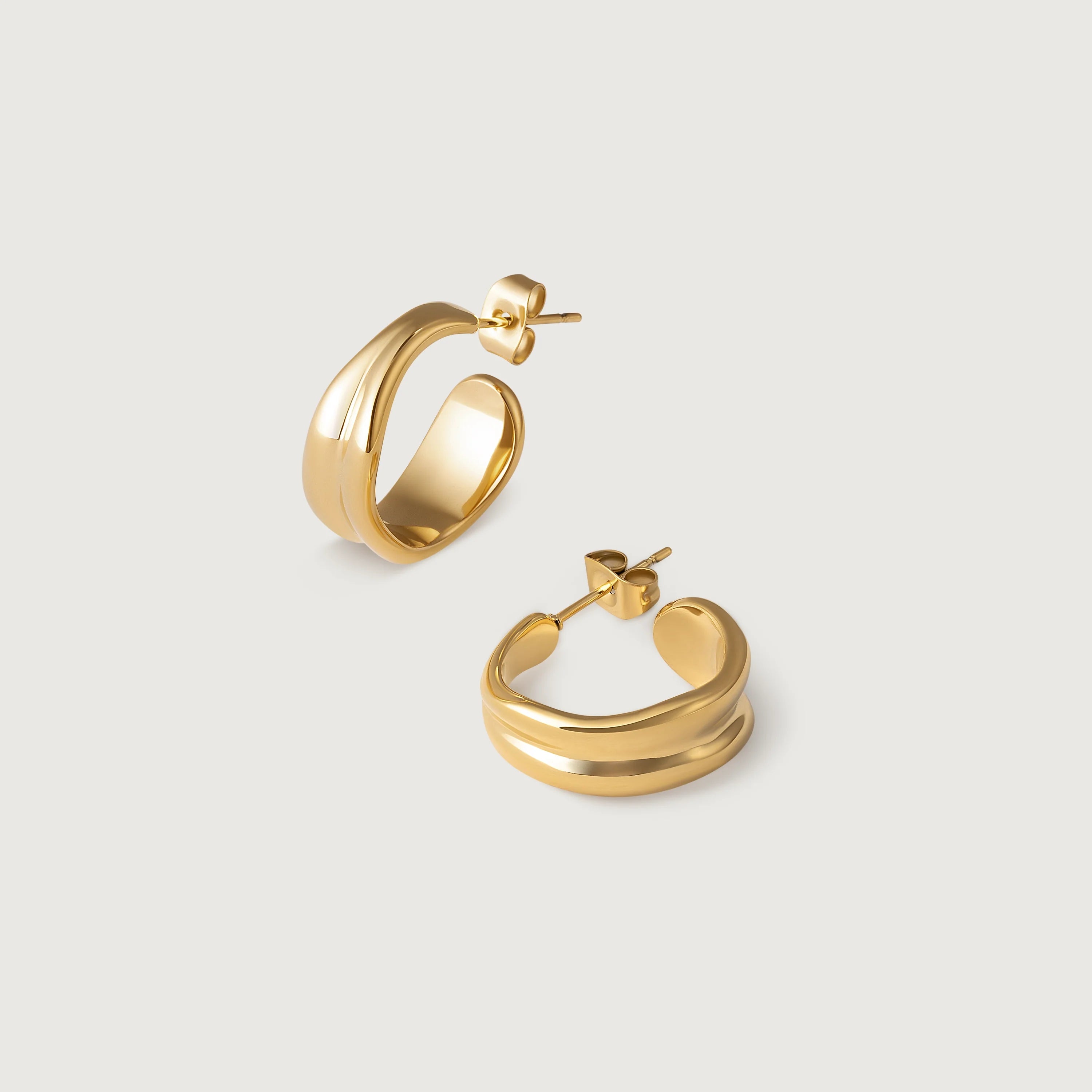
For ear cuffs for sensitive ears, the safest options are 316L stainless steel (the same surgical grade used in medical implants), sterling silver (925), and solid gold. Whether you want a cartilage ear cuff for daily wear or a chunkier piece for occasions, the material should be nickel-free at minimum. If you want a gold cuff that doesn't react with your skin and won't tarnish, PVD-coated stainless steel gives you the warmth of gold with far better durability. The coating bonds at a molecular level, so it won't rub off from the constant contact of a cuff against your ear. That's the material Kaleya Studio uses across all earring collections, and it's why our cuffs are safe for reactive skin, waterproof, and built for all-day wear. Our sensitive skin guide covers this in more detail.
Cuff Earrings That Stay On and Stay Comfortable
Crafted from 316L stainless steel with PVD coating. Waterproof, hypoallergenic, and designed to hold without pinching.


Frequently Asked Questions
Do ear cuffs stay on?
Yes, when fitted properly. Adjust the opening so it grips your ear firmly without pinching. Start at the thin upper rim, move it into position, then tighten with a gentle squeeze. A well-fitted cuff holds through a full day including light exercise, though they are naturally less secure than pierced jewellery.
Do ear cuffs hurt?
Not when the fit is right. If a cuff feels sore or leaves a mark, it needs loosening. Pull the opening apart slightly until it feels comfortable. Lightweight metals help too, as heavier cuffs put more pressure on the ear over time.
Can you wear ear cuffs with piercings?
Yes, and that's actually the most popular way to wear them. Studs on the lobe with a cuff up higher creates the illusion of multiple piercings without any extra holes. You can also combine cuffs with hoops and huggies for a complete layered ear.
What ear do you wear a cuff on?
There's no rule. Some people choose the side that's most visible based on their hair parting. Others add a cuff to whichever ear already has more piercings to build a fuller stack. Wearing cuffs on both ears works too if you prefer symmetry.
Are ear cuffs better than cartilage piercings?
They serve different purposes. Cuffs offer no pain, no healing period, and the ability to reposition daily. Piercings are more secure and support a wider range of jewellery including barbells and flat-back earrings. A lot of people use cuffs to test a placement before getting it pierced permanently.
How do I stop my ear cuff from falling off?
Narrow the opening so it grips more firmly. It should stay put when you give it a light tug. Also make sure you're putting it on correctly: start at the thin upper rim and slide down, rather than trying to clip it directly onto a thicker section of ear. That starting technique makes all the difference.
Your Ear Stack Starts Here
Cuff earrings, studs, hoops, and huggies. All waterproof, all hypoallergenic, all designed to be mixed, stacked, and worn together.
Shop Cuff Earrings Browse All Earrings